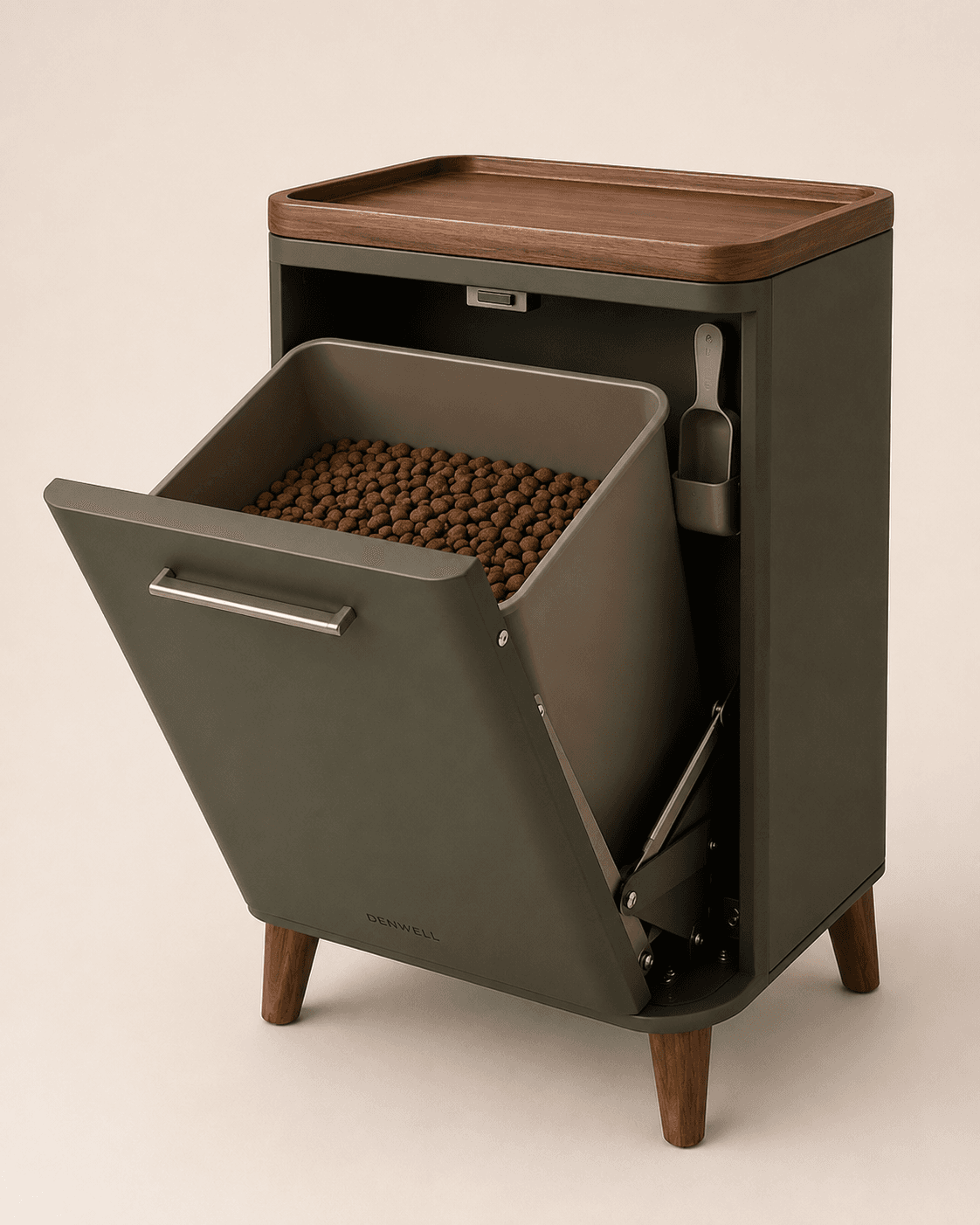
A dog feeding station sounds fancier than it needs to be. Really, it is just the place where the daily mess either gets contained or slowly wins.
The bowl is only one part of it. There is the food bag, the scoop, the treats, the brush, the leash, the towel, the measuring cup that vanished last week, and the little trail of kibble that somehow appears even when you are careful.
A tidy feeding station is not about perfection. It is about making the routine easier to repeat.
Choose the spot you already use
Do not build a feeding station in the place you wish you used. Build it where feeding already happens. If your dog eats near the kitchen island, start there. If the bowl lives by the mudroom door, accept it. A station only works if it matches the habit.
The best spot has enough room for the dog to stand comfortably, enough clearance that people are not stepping over bowls, and enough distance from messy zones like trash, shoes, or wet coats.
Separate the bowl zone from the storage zone
Bowls get wet. Kibble storage should stay dry. Even if the food and bowls live near each other, avoid putting the storage directly where water splashes every day.
A simple setup is bowls on a washable mat, with food storage slightly off to the side. That keeps the routine close without making the storage part of the spill zone.
- Use a mat that is easy to lift and clean.
- Keep food storage away from water splashes.
- Leave enough space for the dog to eat without crowding a walkway.
- Store towels or wipes nearby if your dog is a gloriously messy drinker.
Give the scoop a permanent home
The scoop is the tiny object that causes a surprising amount of daily annoyance. If it floats around on top of the bag, in a drawer, or inside a bin, it will be missing exactly when you are half-awake and trying to feed the dog.
A good feeding station gives the scoop one home. Inside the cabinet, clipped to the bag, hung nearby, or stored in a clean dedicated spot. What matters is that it does not become another loose object.
Keep treats and walk gear close, but not chaotic
Feeding time often touches the rest of the dog routine. You refill the bowl, grab a treat, clip the leash, wipe paws, or remember that the brush is missing. That is why the top of a storage piece matters.
A tray top or small landing area can hold the few things you actually use every day. The trick is to keep it edited. If the surface becomes a general dumping ground, the station stops feeling calm.
- Daily items: leash, treats, brush, towel, waste bags.
- Not daily items: paperwork, mail, chargers, random toys, old packaging.
- Rule of thumb: if you would not use it during feeding or a walk, it probably belongs somewhere else.
Build in refill and cleaning habits
A feeding station should be easy to reset. If refilling the food requires dragging out a heavy bag and holding it open with one knee, you will put it off. If cleaning requires disassembling half the room, you will put that off too.
Look for storage that lets you lift, wipe, and refill without turning it into a project. A removable inner bin can help, as long as you keep the label and lot information from the original food bag somewhere safe.
Do the food-safety basics
The CDC recommends washing hands before and after handling pet food and treats. It also advises following the storage instructions on the food label. Those are not glamorous design tips, but they are the foundation of a feeding station that works.
Dry food should be stored in a clean, dry place. The original bag matters too because it carries product details you may need later. A tidy station should make the safe habit easier, not bury it.
The best feeding station is boring in the best way. You know where the scoop is. The food has a place. The surface is useful. The room still feels like a room. That is the standard worth designing around.
Join the Kickstarter waitlistCompare storage options
Not every dog food storage setup solves the same problem.
Use these comparisons to decide whether a bag, bin, can, feeding station, or Denwell-style cabinet makes the most sense for the room where your dog food actually lives.
Sources
These guides use cautious storage and handling guidance from public pet-food safety resources. Always follow your food label and ask your veterinarian about pet-specific diet questions.