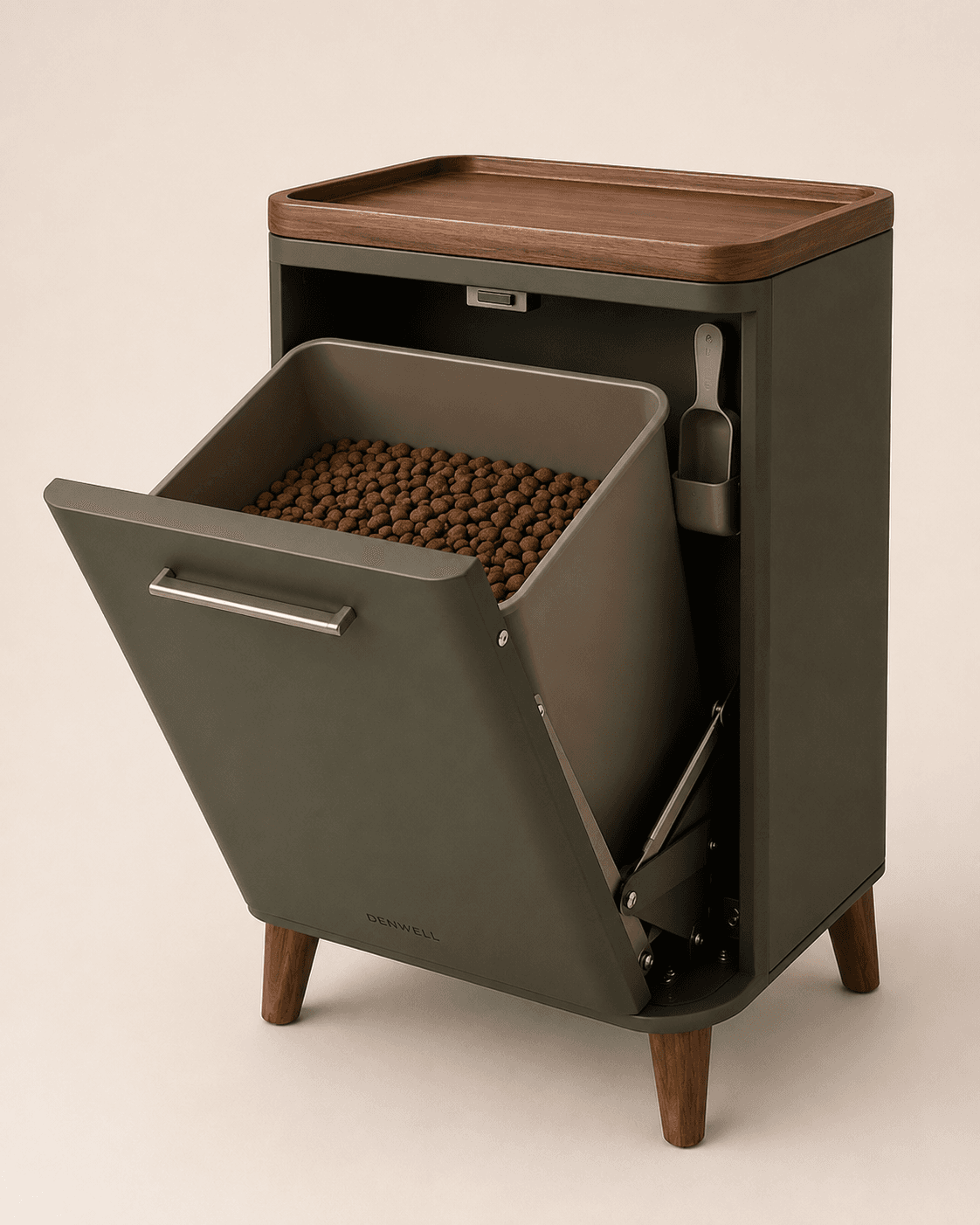
A pantry is convenient until you do not have one. Then the dog food starts migrating. First it is tucked beside the refrigerator. Then it is under a bench. Then the bag is folded over with a chip clip and sitting in a corner where everyone can see it.
That is not a personal failure. It is a design problem. Most dog food storage assumes the food lives out of sight, but a lot of homes do not work that way. The food lives where feeding happens: near the kitchen, near the mudroom door, beside the bowls, or in that awkward stretch of wall that collects leashes and shoes.
The goal is not to hide every sign that a dog lives in the house. The goal is to make the daily routine feel less improvised.
Start with the feeding routine, not the floor plan
The best place to store dog food is usually the place that makes feeding easy and repeatable. If you feed in the kitchen every morning, storing the food two rooms away will feel neat for about three days. After that, the bag comes back.
Look at where the bowl actually sits, where you refill water, where the scoop ends up, and where the dog waits. That little zone is the honest answer. Good storage should support that zone instead of fighting it.
- If feeding happens in the kitchen, keep food close to the bowls but away from heat and splashes.
- If feeding happens near an entry, choose storage that can live with shoes, coats, and dog-walk gear.
- If feeding happens in a mudroom or laundry room, prioritize wipeable surfaces and easy refills.
- If feeding happens in a dining room or open-plan space, the storage needs to look intentional.
Kitchen storage can work, but avoid the problem spots
The kitchen is the obvious choice because it is where food routines already happen. It also has a few traps. Avoid storing dog food right next to the oven, dishwasher, radiator, or a sunny window. Heat and moisture are not friends of dry pet food.
A lower cabinet can work if you have the room, but most families do not have a spare cabinet big enough for a large bag. A freestanding container or cabinet can make more sense, especially if it gives you a usable top surface instead of becoming another thing in the way.
Dining rooms and open-plan spaces need furniture, not bins
This is where most plastic bins start to feel wrong. A clear bin may be practical, but it is not something you want sitting next to a sideboard or dining table. If the dog food lives in a visible room, the storage has to participate in the room.
Think of the storage as a small furniture piece. It should have a finished silhouette, a top that can hold everyday items, and enough visual calm that it does not announce itself as pet storage from across the room.
- Choose closed storage if the room is used for guests.
- Look for a top surface that can hold treats, brushes, or keys.
- Keep the food zone near the wall so bowls and storage do not interrupt foot traffic.
- Avoid anything that looks temporary if it will stay visible every day.
Entryways and mudrooms are honest places for dog food
A mudroom or entryway is often the most realistic place for dog food because the dog routine is already there. Leashes, towels, collars, poop bags, treats, and brushes tend to collect near the door. Food storage can belong there too, as long as it does not turn into a clutter pile.
The catch is that entryways are narrow. Tall storage can work, but the footprint matters. You want something that keeps the bag off the floor, keeps the scoop close, and does not create a toe-stubbing obstacle.
Keep the original bag information
A lot of people pour kibble straight into another container. It feels cleaner, and in some homes it may be the only workable setup. Still, the FDA recommends storing pet food in its original container or bag. If you use another container, the FDA says to put the entire bag inside it rather than pouring the food directly in.
That guidance matters because the bag carries the lot number, date information, and product details you may need if there is ever a recall or product issue. If the bag cannot fit, at least cut and save the lot code and best-by information before throwing packaging away.
The simple rule
If you do not have a pantry, stop trying to make pantry storage happen. Pick the room where feeding actually happens, then make the storage worthy of that room.
For some homes that means a cabinet. For others it means a lidded container inside a bench, a dedicated mudroom zone, or a finished piece beside the bowls. The right answer is the one you will not undo on a busy Tuesday morning.
Denwell is being designed around that reality: dog food lives in real rooms, not imaginary pantries. Join the Kickstarter waitlist if you want updates as the first production run comes together.
Join the Kickstarter waitlistCompare storage options
Not every dog food storage setup solves the same problem.
Use these comparisons to decide whether a bag, bin, can, feeding station, or Denwell-style cabinet makes the most sense for the room where your dog food actually lives.
Sources
These guides use cautious storage and handling guidance from public pet-food safety resources. Always follow your food label and ask your veterinarian about pet-specific diet questions.