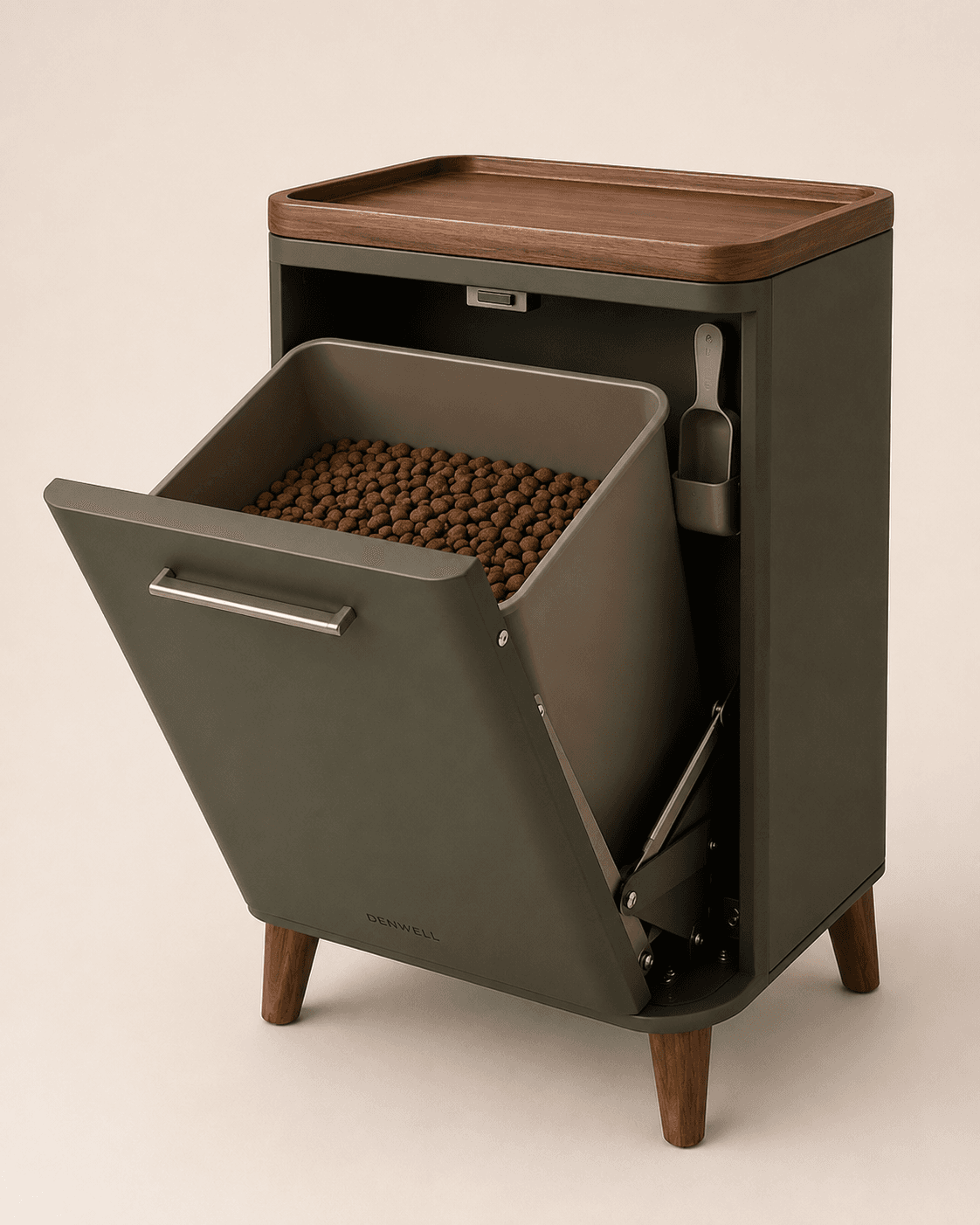
A dog food cabinet has to do two jobs at once. It has to work like storage, and it has to behave like furniture. If it fails either side, you will notice quickly.
A pretty cabinet that is annoying to use becomes a regret. A practical container that looks like garage storage never really belongs in the room. The good version sits in the middle: useful, calm, and built around the daily feeding routine.
Here is what to look for before you buy or back one.
Start with capacity, but do not stop there
Capacity matters because dog food bags are bulky. If you buy large bags, a cabinet should be sized for that reality. But capacity alone is not enough. A giant box that technically fits kibble can still be miserable to use.
Ask how you will refill it, how you will scoop from it, and whether it still works when the food level is low. Big storage should not require awkward reaching every morning.
- Check whether the cabinet is designed for small, medium, or large bags.
- Look for practical access, not just a large internal volume.
- Make sure the height and footprint fit the room where it will actually live.
- Remember that exact capacity can vary by kibble size and final product specs.
Access should be easy when your hands are full
Dog feeding is rarely a serene, two-handed ritual. The dog is waiting, the bowl is nearby, someone is asking a question, and you are trying not to spill kibble. Access matters.
Tilt-out access can be useful because it brings the food toward you instead of forcing you to reach down into a deep container. Drawers, lift lids, and hinged doors can work too, but each has a different footprint and movement pattern.
A removable inner bin makes cleaning less annoying
A removable food-safe inner bin is one of those features that sounds minor until you have to clean around stale crumbs. If the part that holds food can lift out, refills and wipe-downs become more manageable.
Food-safe does not mean magical. You still need to follow the food label, keep the area clean and dry, and avoid making storage promises a cabinet cannot honestly make. But a removable bin makes ordinary maintenance feel less like furniture surgery.
The scoop needs a dedicated spot
A hidden scoop holster is not just a nice detail. It keeps the scoop from sitting on a counter, disappearing into a drawer, or living loose in the food. The best scoop storage is close enough to use every day and protected enough to stay clean.
If a cabinet does not include scoop storage, think about where the scoop will actually go. If the answer is 'probably on top,' the top will eventually look cluttered.
Dog-resistant is the honest standard
A latch can help discourage curious dogs, especially if the food cabinet sits in a visible room. But no household storage piece should be treated as unbeatable against a determined dog. Dogs are creative, persistent, and occasionally ridiculous.
Look for a latch that feels sturdy and easy for humans to use. Then place the cabinet thoughtfully and supervise as needed. That is the honest version.
The top should earn its space
If the cabinet is going to live in a kitchen, dining room, entryway, or mudroom, the top surface matters. A fixed tray top can turn storage into a landing spot for treats, leashes, brushes, keys, or everyday dog gear.
That does not mean the cabinet should become a junk drawer with legs. It means the piece should do more than hold food. In a small home, every visible object has to earn its footprint.
Check the safety basics before the style
The FDA recommends storing pet food in its original container or bag. If you store dry food in another container, the FDA recommends putting the entire bag inside that container instead of pouring kibble directly in. That guidance helps preserve product information, including lot numbers and date codes.
A cabinet can make storage calmer and more practical, but it does not replace basic food-handling habits. Save the bag information, keep the storage area clean and dry, and follow the label.
A good dog food cabinet should feel boringly useful after the novelty wears off. It opens easily. The scoop is there. The top is useful. The food zone looks intentional. That is the bar.
Join the Kickstarter waitlistCompare storage options
Not every dog food storage setup solves the same problem.
Use these comparisons to decide whether a bag, bin, can, feeding station, or Denwell-style cabinet makes the most sense for the room where your dog food actually lives.
Sources
These guides use cautious storage and handling guidance from public pet-food safety resources. Always follow your food label and ask your veterinarian about pet-specific diet questions.