The plastic dog food bin became popular for a reason. It is cheap, easy to find, and better than leaving an open bag slumped against the wall. But it also looks exactly like what it is: a utility bin.
That is fine in a garage. It is less fine in a kitchen, dining room, entryway, or apartment where there is nowhere to hide it. If your dog food storage is going to stay out, it should look like it was invited into the room.
Here are the main options, with the honest tradeoffs.
The original bag
The original bag is not pretty, but it has advantages. It has the product label, lot number, best-by date, feeding information, and storage directions. The FDA recommends keeping pet food in the original container or bag, which makes the plain old bag more useful than it looks.
The problem is daily life. A big bag is awkward to move, hard to scoop from cleanly, and visually loud. Even when folded neatly, it tends to sag, crease, and collect kibble dust around the base.
- Best for: closets, garages, utility rooms, or inside another container.
- Watch out for: spills, pests, torn packaging, and visual clutter.
- Good habit: save the lot number and best-by date if you transfer food elsewhere.
The plastic bin
Plastic bins solve the bag problem, but they create a new one. They are practical and visually temporary. In a pantry, that may not matter. In an open room, it does.
If you use a plastic bin, keep it clean and dry. Do not park it near heat or moisture, and check the food label for storage directions. The CDC advises following storage instructions on pet food labels and washing hands before and after handling pet food or treats.
- Best for: utility spaces and hidden storage.
- Watch out for: food residue, odor, and the bin becoming a permanent corner object.
- Better version: place the original bag inside the bin when possible.
The metal can
A metal can is often better looking than a plastic bin, especially in a farmhouse or utility-room setting. It can feel intentional. It can also feel heavy, noisy, or too casual depending on the room.
Metal cans work best when they match the rest of the space. If the room already has utilitarian materials, the can belongs. If the room has softer furniture, a metal can may still read as storage you forgot to put away.
The hidden cabinet
A standard cabinet is a clean solution if you have one to spare. Many people do not. Large dog food bags eat up a lot of lower-cabinet space, and the daily scoop can get annoying if the bag is wedged behind cleaning supplies or cookware.
If you do use built-in cabinet storage, keep it dedicated. Mixing dog food with cleaning products, trash bags, or random household overflow is how tidy storage becomes a daily irritation.
The furniture-style dog food cabinet
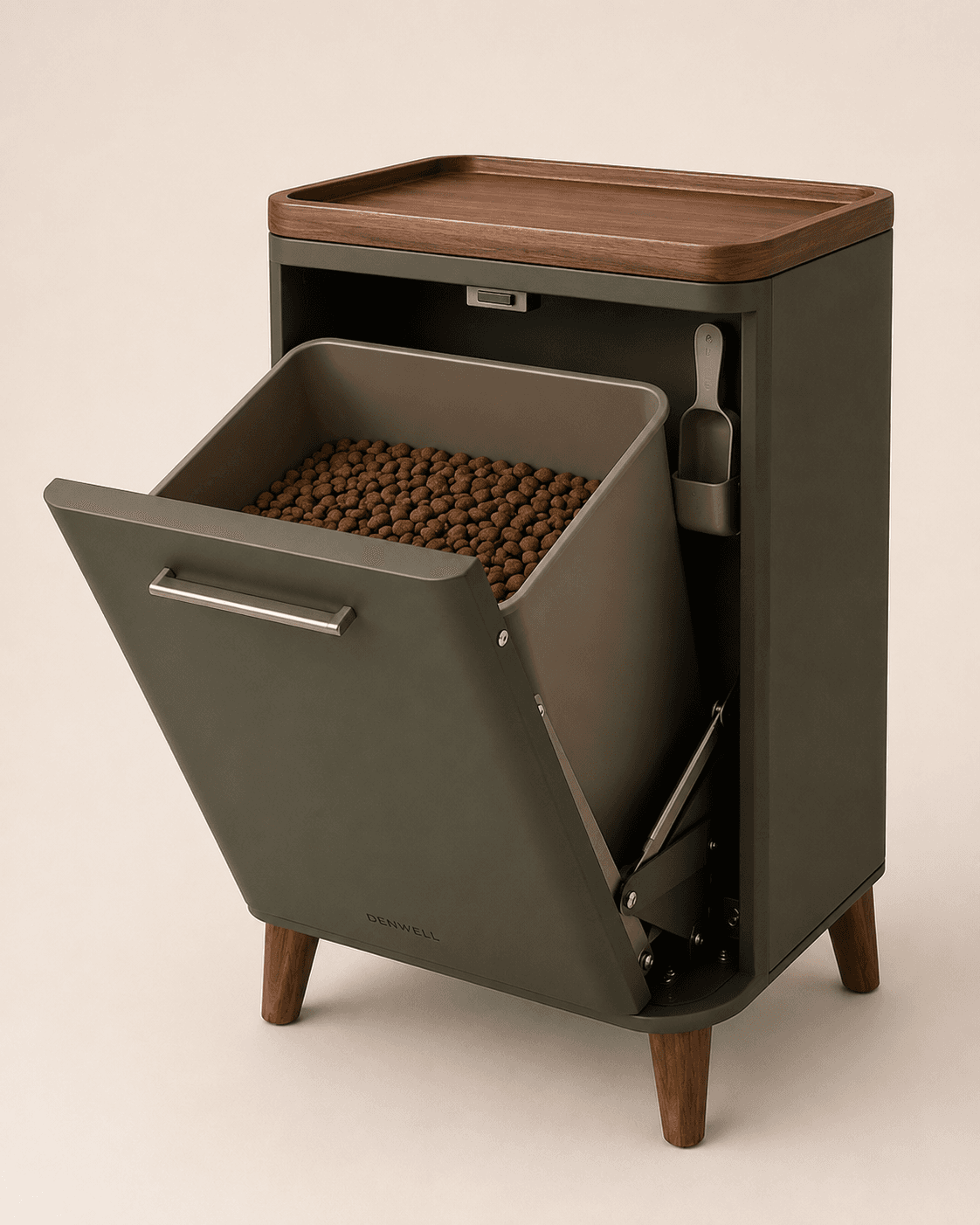
A furniture-style cabinet is for homes where dog food cannot realistically disappear. It turns storage into something closer to a small side table, cabinet, or utility piece. That is the direction Denwell is built around.
The point is not to disguise the fact that you have a dog. The point is to stop making dog food look like an afterthought. A cabinet can hold food, keep the scoop nearby, offer a usable top, and still sit comfortably in the room.
- Best for: kitchens, dining rooms, entries, mudrooms, and open-plan homes.
- Watch out for: overclaiming. Look for practical features, not vague freshness promises.
- Useful features: tilt-out access, removable inner bin, dog-resistant latch, scoop storage, and a fixed tray top.
What actually makes storage feel better
Good dog food storage is not only about the container. It is about the whole routine. Where does the scoop go? Where do treats live? Where do you put the leash when you walk in? Where does the bag go when you refill?
A good setup reduces little frictions. The scoop is not missing. The top is not wasted. The food is not shoved into a corner you hate looking at. It sounds small, but small is the point. Feeding happens every day.
The best dog food storage idea is the one that respects both sides of the problem: the food needs practical storage, and the room still needs to feel like your home.
Join the Kickstarter waitlistCompare storage options
Not every dog food storage setup solves the same problem.
Use these comparisons to decide whether a bag, bin, can, feeding station, or Denwell-style cabinet makes the most sense for the room where your dog food actually lives.
Sources
These guides use cautious storage and handling guidance from public pet-food safety resources. Always follow your food label and ask your veterinarian about pet-specific diet questions.