There is no perfect dog food storage setup. There is the setup that fits your house, your dog, your bag size, and your tolerance for looking at a plastic bin every day.
The three most common options are simple: keep the food in the original bag, move it into a bin, or use some kind of cabinet. Each one solves a different problem and creates a different annoyance.
Here is the practical comparison.
The original bag is safest for information, weakest for daily use
The original bag carries the information you may need later: lot number, best-by date, feeding guidance, product name, and storage instructions. That is why the FDA recommends storing pet food in the original container or bag.
For daily use, though, the bag is clumsy. It slumps. It tears. It is awkward to scoop from when full and annoying when low. If it lives in a closet, fine. If it lives in a visible corner, it can make the whole room feel unfinished.
- Strength: keeps product information together.
- Weakness: messy, awkward, and visually loud.
- Best fit: hidden storage or inside another container.
The plastic bin is practical, but it rarely looks settled
A plastic bin is the obvious upgrade from an open bag. It is easier to scoop from, easier to move, and more contained. It can also protect the bag if you place the entire bag inside the bin.
The weakness is visual. In a garage or pantry, nobody cares. In a kitchen or dining room, the bin reads as temporary even if it has been there for three years. It solves the spill problem but not the room problem.
- Strength: affordable and easy to find.
- Weakness: utilitarian look, especially in visible rooms.
- Best fit: pantry, garage, laundry room, or cabinet interior.
The metal can looks better in some homes, worse in others
Metal cans can feel more finished than plastic bins. They suit utility rooms, farmhouse kitchens, and mudrooms with practical materials. They also tend to be loud, heavy, and not always easy to scoop from.
A can is a style choice as much as a storage choice. If it matches your home, it can work nicely. If it does not, it will look like a prop from another room.
Built-in cabinet storage is clean if you have the space
A lower kitchen cabinet can hide dog food completely, which is appealing. The issue is capacity. Large bags take up a surprising amount of space, and many kitchens already have every cabinet spoken for.
Built-in storage also has a daily-use problem. If you have to pull out the bag, unfold it, scoop, fold it back down, and shove it behind something else, the routine gets old. Hidden is not the same as convenient.
A furniture-style cabinet solves the visible-room problem
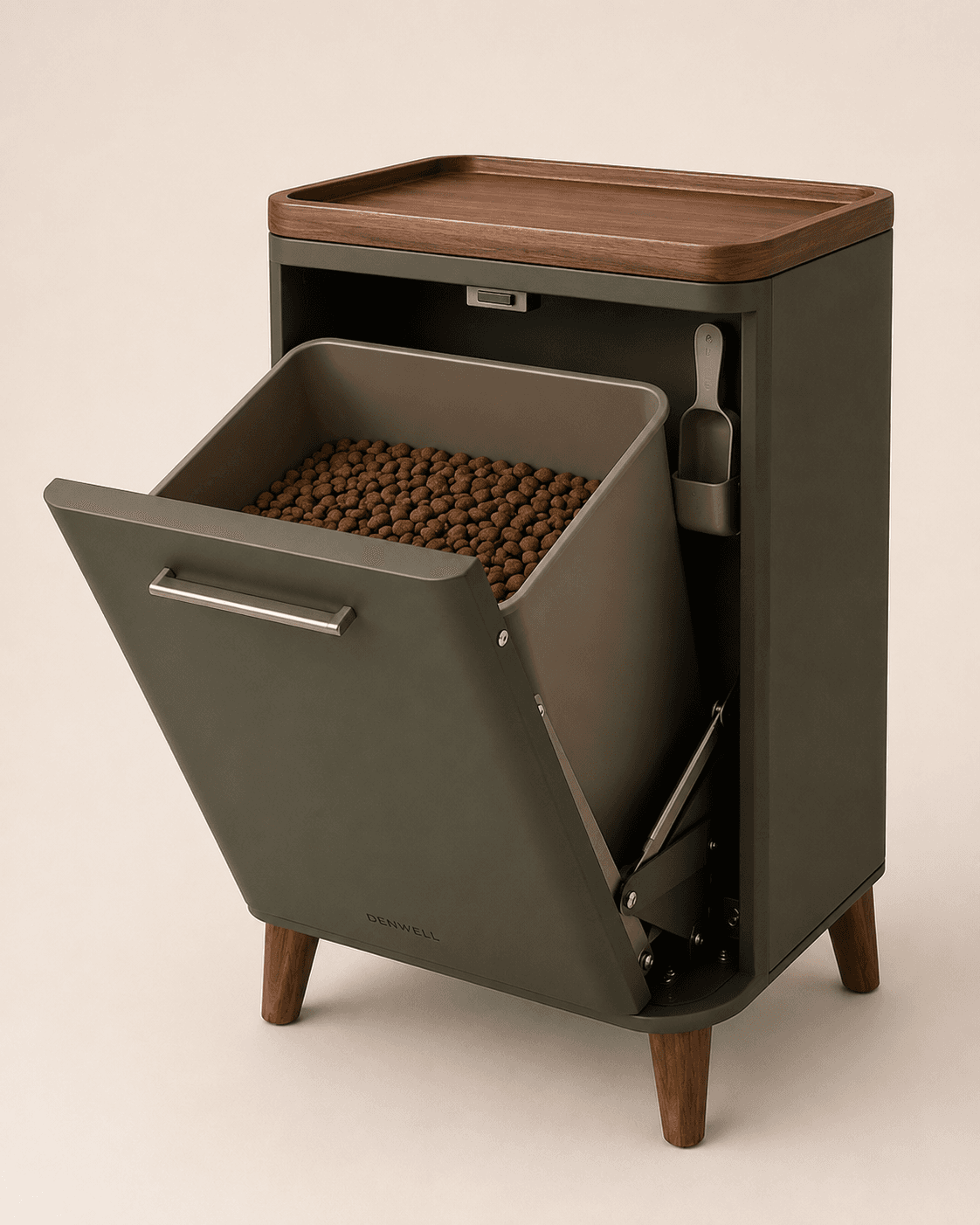
A furniture-style dog food cabinet is for the homes where dog food storage cannot realistically disappear. It gives the routine a place in the room without making the room feel like a storage closet.
This is the Denwell point of view. Dog food often lives in kitchens, dining rooms, entries, and mudrooms. The storage should be designed for those rooms, not just tolerated in them.
- Strength: better for visible rooms and daily routines.
- Weakness: larger investment than a basic bin.
- Best fit: homes where dog food is used daily in a shared living space.
The quick decision guide
If the food lives in a hidden utility space, a bag inside a clean bin may be enough. If the food lives where people gather, a cabinet starts to make more sense. If you are constantly moving the bag because it looks bad, that is a signal.
The best storage is the one you will keep using after the first week. It should be easy to refill, easy to clean, and easy to live with.
- Choose the bag if you have hidden storage and want to preserve product info simply.
- Choose a plastic bin if cost and basic containment matter most.
- Choose a metal can if it fits the style of your utility space.
- Choose a cabinet if the storage lives in a visible room and needs to look intentional.
Do not skip the food-handling basics
Whatever you choose, follow the storage directions on the pet food label. The CDC also recommends washing hands before and after handling pet food or treats.
Good storage is not only about looking better. It should make the safe, clean habit easier to repeat.
A bag, bin, or cabinet can all be right. The wrong answer is the one that makes your home harder to live in every day.
Join the Kickstarter waitlistCompare storage options
Not every dog food storage setup solves the same problem.
Use these comparisons to decide whether a bag, bin, can, feeding station, or Denwell-style cabinet makes the most sense for the room where your dog food actually lives.
Sources
These guides use cautious storage and handling guidance from public pet-food safety resources. Always follow your food label and ask your veterinarian about pet-specific diet questions.